


Catalan Expressions & Language, Key Takeaways:
- Catalan is alive—Barcelona’s local language remains woven into daily life, culture, traditions, and the city’s identity.
- A few words matter—Simple Catalan phrases often create warmer interactions and a more authentic Barcelona experience.
- Modernisme speaks Catalan—Gaudí’s world emerged from Catalan culture, language, and traditions that still shape Barcelona.
- Food speaks Catalan—Many iconic dishes, ingredients, and restaurant expressions differ noticeably from their Spanish equivalents.
- Pronunciation beats perfection—Making the effort to use Catalan expressions matters far more than speaking it flawlessly.
Have specific questions? Jump directly to the FAQ section below for clear, practical answers.
Craving to experience the authentic catalan culture while in Barcelona? Book a private BrightSide Tours Private Barcelona Experience by sidecar motorcycle. The Half Day Barcelona City Tour is the perfect choice. A great mix of cultural highlights, historical background, local secrets and amazing viewpoints in just 3.30h.

The Catalan Language And Its Expressions As Part of Barcelona’s Identity
Before learning a few useful phrases, it helps to understand one thing: Catalan is not a dialect of Spanish.
Catalan is its own language, with over a thousand years of history. Linguistically, it sits closer to French, Italian, and Occitan than many visitors realize. It is spoken across Catalonia, the Balearic Islands, parts of Valencia, Andorra, and several smaller regions around the Mediterranean.
During the Franco dictatorship (1939–1975), Catalan was heavily restricted in public life. Yet families continued speaking it at home, preserving it through generations. Today, you’ll hear Catalan in schools, shops, markets, restaurants, and everyday conversations throughout Barcelona. The language’s resilience during this period remains an important part of modern Catalan identity.
For many locals, hearing a visitor try a few words in Catalan is not about linguistic perfection. It is simply a gesture of curiosity and respect.
Antoni Gaudí himself was deeply connected to Catalan culture and identity. Even the Sagrada Família includes inscriptions in Catalan alongside other languages, reflecting the city’s cultural heritage. Understanding even a few words helps you see Barcelona not only as a beautiful city, but as a place with its own voice.
If Gaudí’s connection to Catalan culture interests you, our guide to the Modernisme houses of Barcelona offers a deeper look at how architecture, identity, and Catalan culture became inseparable in the city we know today.
THE BRIGHT INSIGHT
The fastest way to spot whether a restaurant, bakery, or neighborhood café feels genuinely local is often the language you hear around you. Listen for Catalan conversations. It remains the everyday soundtrack of much of Barcelona.

Essential Catalan Laguage Greetings Every Traveler Should Know
These simple greetings are enough to start most interactions on the right foot.
| English | Català | How it sounds | Español |
| Good morning | Bon dia | bon DEE-ah | Buenos días |
| Good afternoon | Bona tarda | BO-na TAR-da | Buenas tardes |
| Goodbye | Adéu | a-DEU | Adiós |
| See you soon | Fins aviat | feens ah-vee-AT | Hasta pronto |
| See you later | Fins ara | feens A-ra | Hasta luego |
| Thank you very much | Moltes gràcies | MOL-tes GRA-see-es | Muchas gracias |
| You’re welcome | De res | de RES | De nada |
| Please | Si us plau | see oos PLOW | Por favor |
| Oh my God! | Mare meva! | MA-re ME-va | ¡Madre mía! |
One practical tip: “Bon dia” is commonly used well into the early afternoon. You’ll hear it far more often than visitors expect.
“Mare meva!” is a wonderfully expressive Catalan reaction. You might hear it a lot during a FC Barcelona match, a surprising story, or when someone catches their first glimpse of the Sagrada Família. Literally translates into “My Mother” but its significance sits closer to “Oh my God!”.
Useful Catalan Phrases for Getting Around Barcelona
Barcelona is wonderfully walkable, but these expressions can be surprisingly useful when asking for directions.
| English | Català | How it sounds | Español |
| Where is…? | On és…? | on ES | ¿Dónde está…? |
| Excuse me, how do I get to…? | Perdoni, per anar a…? | per-do-NEE, per a-NAR a | Perdón, ¿cómo voy a…? |
Whether you’re wandering through Gràcia, exploring Sant Antoni, or heading toward Montjuïc, these two phrases will cover most situations.
For travelers who enjoy discovering the city beyond the obvious landmarks, our guides naturally weave these local nuances into every route through Barcelona’s most fascinating neighborhoods. Explore our private Barcelona experiences and city explorations if you’d like to discover the city through a more local lens.
What to Say in Restaurants and Markets
Food is where language becomes fun. Many travel guides teach visitors Spanish food vocabulary before they arrive in Barcelona. While locals understand Spanish perfectly well, you’ll often see different names on menus written in Catalan.
| English | Català | How it sounds | Español |
| Coffee with milk | Cafè amb llet | ka-FEH am YET | Café con leche |
| Potato omelette | Truita de patates | TROO-ya de pa-TA-tes | Tortilla de patatas |
| The bill, please | El compte, si us plau | el KOM-te, see oos PLOW | La cuenta, por favor |
| Finger-licking good | Per llepar-se’n els dits | per yeh-PAR-sen els DEETS | Para chuparse los dedos |
The Story Behind Pa Amb Tomàquet
If there is one dish that symbolizes Catalonia, it is pa amb tomàquet.
Literally, it means “bread with tomato.” Traditionally, ripe tomato is rubbed directly onto toasted bread, then finished with olive oil, salt, and sometimes a little garlic.
The dish became popular as a practical way to soften and flavor bread that had gone stale. What began as a simple everyday solution eventually became one of the most iconic foods in Catalan cuisine.
Elsewhere in Spain, you may hear the adapted term pantumaca. In Catalonia, locals always call it pa amb tomàquet.
THE BRIGHT INSIGHT
Many visitors expect sliced tomatoes on bread. In the traditional version, the tomato is rubbed directly onto the bread, which is then dressed with olive oil and salt (with locals big debate over what is first oil or salt!).
Curious to explore Catalan food culture beyond pa amb tomàquet? Our guide to an El Born food tour in Barcelona explores the tapas traditions, vermouth culture, and local flavors that define one of the city’s most beloved neighborhoods.
No doubt one of the most obvious cultural signs in Barcelona you will notice is the love for motorcycles. Barcelona is the European capital of motorcycles for a good reason – it’s the perfect city to enjoy a safe & smooth ride with the Mediterranean breeze on the face.
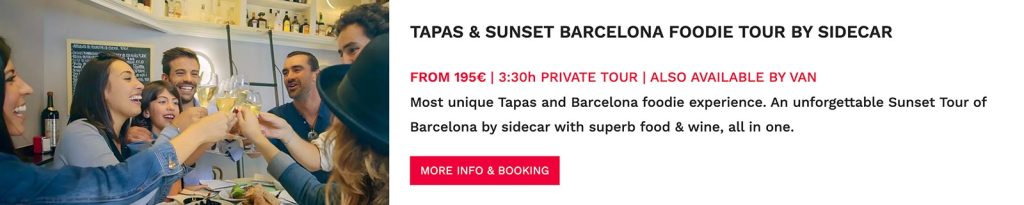
To take part of this local ritual, we suggest our unique Sunset & Night Tour of Barcelona by Sidecar With a Private Guide. With hotel pick-up and drop-off, it’s an unforgettable experience that will take you on a magical ride by the most stunning architectural masterpieces illuminated at night, up the hills of Montjuic for the best views of the sunset, by the beaches and waterfront and the most glamorous and fun loving areas of Barcelona.

Five Authentic Catalan Expressions You Won’t Find in Most Guidebooks
These are the expressions that often make locals smile.
| English Meaning | Català | How it sounds | Español |
| Come on! / Really? | Au, va! | au VA | ¡Venga! / ¡No me digas! |
| Quite impressive | Déu n’hi do | deu nee DO | No está nada mal / Vaya |
| Getting by, taking it easy | Anar fent | a-NAR fent | Tirando / Ahí vamos |
| Let’s go! | Som-hi! | som HEE | ¡Vamos! |
| A true-blue Catalan | Català de la ceba | kata-LA de la SE-ba | Catalán de pura cepa |
Simply recognizing them when you hear them can make conversations feel more meaningful.
“Au, va!” is especially useful. Depending on the situation, it can express surprise, disbelief, encouragement, or playful disagreement.
“Català de la ceba” literally translates as “onion Catalan.” It refers to someone deeply rooted in Catalan culture and traditions. You probably won’t need to use it yourself, but you’ll certainly earn points for recognizing it.

Catalan Expressions: Why Locals Appreciate Your Effort
Barcelona receives millions of visitors every year.
Most people naturally assume Spanish (Castilian) is the local language. Learning a few Catalan words signals something different: that you’re interested in understanding the place you’re visiting rather than simply consuming it.
Beginning with a “Bon dia,” thanking someone with a “Moltes gràcies,” or ordering “El compte, si us plau” often creates an immediate connection.
Language is one of the simplest ways to travel more thoughtfully.
If you’re curious about discovering Barcelona through local stories, hidden viewpoints, food traditions, and neighborhood culture, consider a private Barcelona city tour with a local guide designed for travelers who want to understand the city beyond the obvious highlights.

Conclusion
Barcelona’s architecture may first capture your attention, but its language reveals something deeper.
After centuries of change, Catalan remains woven into everyday life across Barcelona.
A simple “Bon dia,” a sincere “Moltes gràcies,” or an enthusiastic “Au, va!” can open the door to warmer conversations and a more authentic experience. And who knows? Your first “Bon dia” may be the beginning of a lifelong connection with Barcelona.
To understand the neighborhoods, viewpoints, and urban geography that shape the Catalan Culture, a curated private exploration of Barcelona by sidecar with a private guide can provide invaluable orientation before festival nights unfold. Find more on https://brightsidetours.com/barcelona-tours/
FAQ’s: The Catalan Language and Expressions
Should I learn Catalan or Spanish before visiting Barcelona?
Learn a handful of Catalan greetings first. A simple “Bon dia” or “Moltes gràcies” often earns a smile before the conversation naturally continues in English or Spanish.
Will people understand me if I speak Spanish instead of Catalan?
Yes. Barcelona is bilingual. Still, beginning with “Bon dia” is a thoughtful gesture, especially in neighborhoods such as Gràcia, Sarrià, or Sant Andreu.
What’s the easiest Catalan phrase to remember?
“Bon dia” is the most useful. You’ll hear it from breakfast until early afternoon in cafés, bakeries, hotels, markets, and local shops.
How do I ask for the bill in a restaurant?
Simply say “El compte, si us plau.” It’s the natural Catalan expression and one you’ll hear regularly in local restaurants throughout Barcelona.
What does “Déu n’hi do” mean?
It’s a versatile expression of pleasant surprise or admiration. If someone shows you a spectacular view, “Déu n’hi do!” feels perfectly natural.
When should I say “Au, va!”?
Use it to react with surprise, disbelief, or playful encouragement. Think of it as the Catalan equivalent of “Come on!” or “No way!”
Is Catalan spoken everywhere in Barcelona?
You’ll hear both Catalan and Spanish every day. Catalan is especially common in neighborhood cafés, local markets, schools, and family-run businesses.
What food words should I recognize on menus?
Start with pa amb tomàquet, cafè amb llet, and truita de patates. They’re everyday classics you’ll find across Barcelona, from traditional bars to fine dining.
Do I need perfect pronunciation?
Not at all. Speak naturally and don’t worry about your accent. Most locals appreciate the effort long before they notice the pronunciation.


